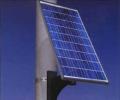
The Union new and renewable energy ministry said Uttar Pradesh was progressing "very well" in off-grid solar energy space
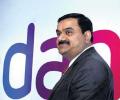
Adani Green Energy Limited is developing 30 GW renewable energy plant on barren land at Khavda in Kutch of Gujarat over area of 538 sq km after which the project would be the planet's largest power plant.

Tata Power on Saturday said it has inked a pact with IIT Delhi to work together on clean energy and other projects that can be transformed from research and development level to pilot stage. Tata Power, one of India's largest private sector integrated utilities, and the Indian Institute of Technology (IIT) Delhi have signed a Memorandum of Understanding (MoU) to collaborate in areas like smart grid technology, clean energy solutions, a company statement said. Considering the large number of experts with their excellence in different fields in IIT Delhi and Tata Power, there is an immense potential to collaborate between academia, research and domain experts from business with a high transformational impact, it added.

From the 30-share pack, Hindustan Unilever, Tata Motors, Axis Bank, Nestle India, Asian Paints, ITC, Reliance Industries, Mahindra & Mahindra, IndusInd Bank and State Bank of India were among the laggards. Larsen & Toubro, Tata Steel, JSW Steel, HDFC Bank, Adani Ports, Kotak Mahindra Bank, Bharti Airtel and PowerGrid were among the gainers.
India needs to recognise and address challenges posed by its dependence on China for critical minerals and examine the implications of phasing down coal on bank balance sheets as it accelerates its green transition, the government's Economic Survey 2023-24 tabled in Parliament on Monday said. As part of its national plan to contribute to meeting the global goal of limiting the average temperature rise to 1.5 degrees Celsius, India has committed to reducing emissions by 45 per cent below 2005 levels by 2030, achieving 50 per cent cumulative electric installed capacity from non-fossil fuel-based energy resources, and creating a carbon sink of 2.5 to 3 gigatons of CO2 equivalent through additional forest and tree cover.

Zomato emerged as the biggest gainer, followed by Reliance, Nestle, Asian Paints and Power Grid.

Barely three weeks after the state was charged for having triggered the multiple grid failure and plunging more than half of India into darkness, the Uttar Pradesh government on Tuesday claimed to have averted an abrupt failure of the northern grid.

After witnessing cloudy skies this year, the country's renewable energy sector is expected to boom with a likely investment of over $15 billion in 2022 as the government focuses on electric vehicles, green hydrogen, manufacturing of solar equipment as well as achieving the ambitious 175 GW renewable capacity target. India, which has an installed renewable energy generation capacity of a little over 150 GW, aims to reach 175 GW in 2022. Out of the total mix, 100 GW would be from solar, 60 GW from wind, 10 GW from bio-power and 5 GW from small hydro power projects.

Amid the scorching heat, with temperatures soaring between 47 and 50 degrees Celsius, irregular electricity supply has added fuel to the fire, aggravating problems for people, farmers, and the industrial sector. While the state's Bhajan Lal Sharma-led Bharatiya Janata Party (BJP) government claims to be improving the power supply, the opposition is trying to corner the government on the issue. Amid all this, undeclared power cuts are continuing in districts including the capital, that are already facing power cuts.

Top gainers in the Sensex pack included Tata Steel, Vedanta, SBI, Tech Mahindra, Bajaj Finance, Asian Paints, M&M, NTPC and PowerGrid, rising up to 3.95 per cent.

On the Sensex chart, Reliance Industries fell 5.36 per cent, followed by IndusInd Bank, HCL Tech, Asian Paints, UltraTech Cement and PowerGrid - dropping as much as 4.72 per cent. Among the gainers were Axis Bank, Sun Pharma, Bajaj Auto, Bajaj FinServ, HDFC Bank and Dr Reddy's.
From 30 Sensex firms, Adani Ports, NTPC, Power Grid, State Bank of India, Nestle, Mahindra & Mahindra, Reliance Industries and Tata Consultancy Services were the biggest laggards. Axis Bank, Infosys, JSW Steel, Tata Motors, HDFC Bank and Kotak Mahindra Bank were among the gainers from the blue-chip pack.
India's jugalbandhi with coal and clean energy is coming unstuck, neither achieving adequate renewable generation nor ensuring sufficient coal-fired power in the quest to become a $5-trillion economy. Six months have elapsed since Prime Minister Narendra Modi announced an ambitious climate agenda for India at COP26 at Glasgow. The net zero emissions target by 2070 is a distant one, but there are nearer-term plans to meet 50 per cent of energy demand with renewables by 2030 by increasing capacity to 450 Gw. A cursory look at the balance sheet of India's climate progress since November reveals ponderous progress towards meeting the renewables target even as the country is scrambling to expand coal-fired generation in the face of a power crisis.

To mobilise private capital in the clean energy sector, the US has agreed to place a field investment officer in India apart from hosting a series of events to overcome strategic barriers in accelerating institutional and private financing.
Green energy may have become a buzzword in the cities today but people in the hinterland of the country prefer conventional power grids for electricity.

Talks on global climate finance virtually ground to a halt last week at COP29, the annual United Nations (UN) Climate Change event in Baku, Azerbaijan, as the developed world, led by the European Union (EU), and developing countries including India, Brazil, South Africa, and a clutch of island nations and African countries faced a wide chasm between their expectations. This has raised doubts about whether an agreement can be reached this week or whether talks will spill over to COP30, to be held next year in Benem, Brazil.

Among the 30 Sensex companies, Axis Bank, HDFC Bank, ICICI Bank, Kotak Mahindra Bank, IndusInd Bank, State Bank of India, Infosys, Wipro, Tech Mahindra and HCL Technologies were the gainers. On the other hand, Titan, Maruti, Bharti Airtel, Larsen & Toubro, NTPC, Reliance Industries, Bajaj Finance and Power Grid were among the laggards.

Ultratech Cement was the top gainer in the Sensex pack, surging nearly 3 per cent, followed by M&M, Maruti, Tata Steel, TCS, L&T, SBI and HUL. NSE Nifty advanced 52.35 points to 18,308.10.
Reliance Energy Limited has outbid seven other companies, including Tata Power and GMR, to emerge as the top contender for building India's first fully independent private power transmission lines.

The market for energy efficiency products and services, and tradeable efficiency certificates - which India is going to launch - could be as large as Rs 74,000 crore.
This is expected to mobilise up to $400 million to provide clean and renewable electricity to up to 1 million households by 2020

India has an unprecedented opportunity to develop solar industry because like China, it offers scale which is critical to reducing costs and to stimulate innovation, says Shyam Saran.

The market capitalisation of BSE-listed companies hit a record high of Rs 429.32 lakh crore on Wednesday as the BSE benchmark Sensex ended higher amid a largely positive trend in global equities. The 30-share BSE Sensex climbed 149.98 points or 0.20 per cent to settle at 76,606.57. During the day, it jumped 593.94 points or 0.77 per cent to 77,050.53.
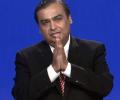
Billionaire Mukesh Ambani-led Reliance Industries Ltd's plans for investing Rs 75,000 crore in solar, batteries, fuel cells and hydrogen could create valuation of $36 billion (Rs 2.6 lakh crore) for the new energy business, Wall Street brokerage Bernstein Research said in a report. Reliance currently has three verticals -- oil-to-chemical (O2C) business that houses its oil refineries, petrochemical plants and fuel retailing business; digital services that comprises telecom arm Jio; and retail including e-commerce. New Energy will be the fourth vertical. At the company's annual general meeting of shareholders last month, Ambani announced a plan to invest Rs 75,000 crore in a new energy business over the next 3 years in the next stage in its transformation.
NTPC, JSW Steel, Tata Motors, Bharti Airtel, Power Grid, Kotak Mahindra Bank and Tech Mahindra were also among the major gainers. Larsen & Toubro, Sun Pharma, Nestle, HDFC Bank and Maruti were among the laggards.
The project biomass solar energy type and would be developed in a viability gap funding kind of model, in which the end product has to sold at a specified price.

Among the Sensex firms, NTPC, Power Grid, Reliance Industries, Bajaj Finserv, Axis Bank, Tech Mahindra, ICICI Bank, Bharti Airtel and IndusInd Bank were the biggest gainers. JSW Steel, Mahindra & Mahindra, Tata Steel, UltraTech Cement, Infosys and Titan were among the laggards.
China tops the list with 3.5 million, followed by Brazil with 918,000.

Reversed starting grids, one of several proposals under discussion by Formula One team bosses on Tuesday in meetings about the sport's future look and direction, would spell "disaster", according to French driver Romain Grosjean. The concept of setting the grid by reversing the order of the top 10 drivers from qualifying, so that the fastest starts 10th, has been discussed previously to make races less predictable. The usual front-runners would then have to fight through the field rather than pulling clear at the front without being challenged. Championship points would be awarded for qualifying to give drivers every incentive to chase pole position. Grosjean, now with the new U.S.-owned Haas F1 team, experienced the reversed format on his way to winning the GP2 feeder series. "Disaster," he told Reuters when asked about the idea during pre-season testing. "I've been doing it in GP2 and it's probably why you win the title but it's not why you win races." Grosjean said making cars harder and more physical to drive, and drivers more susceptible to fatigue and mistakes, would have the same end result in terms of adding to the excitement without being artificial.

AAERB's permission for RAPP-7 paves the way for the subsequent phases of reactor commissioning leading to its commercial electricity generation.
Top gainers in the Sensex pack included Bajaj Finance, ONGC, Yes Bank, HDFC, HCL Tech, Tech Mahindra, TCS, ICICI Bank and RIL, rising up to 3.57 per cent.

The first unit of the Kudankulam Nuclear Power Plant was synchronised with the southern power grid on Tuesday, marking a major milestone in power generation of the ambitious Indo-Russian nuclear collaboration in Tamil Nadu.
"Despite a booming economy, India's growth potential is constrained by inadequate electricity services and limited power generation and supply infrastructure... The power sector has improved in recent years, albeit in an environment where demand for electricity continues to outstrip supply," the bank said. The Bank has made three direct loans to Power Grid since 1993.
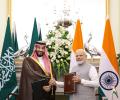
India and Saudi Arabia on Monday decided to expedite implementation of the $50 billion West Coast refinery project, and identified energy, defence, semiconductor and space as areas for intensified cooperation during talks between Prime Minister Narendra Modi and Saudi Crown Prince Mohammed Bin Salman Bin Abdulaziz Al-Saud.

RIL was the biggest gainer in the Sensex pack, rising 2.63 per cent, followed by NTPC, Axis Bank, Tata Steel, PowerGrid, HDFC twins, Bharti Airtel, M&M, ICICI Bank, SBI and Bajaj Finance -- gaining up to 2.51 per cent.

'Interim Budget has ignited the entrepreneurial spirit.'

State Bank of India was the biggest gainer in the Sensex pack, rising 4.24 per cent, followed by Tata Steel, Axis Bank, Maruti, NTPC, PowerGrid, ITC and Nestle India. Reliance jumped 1.15 per cent to end at Rs 2,962.60 apiece on BSE.
